In an age of austerity where every penny counts, such savings can make a huge difference.
- Don’t pay for unrequired tool maintenance.
Reduce maintenance cost.
Not all your tool inventory is utilised but many companies still blanket maintain tool quarterly. Save money by only servicing the tools that have been used and maybe a light service for tools hardly used. - Don’t pay for tools sat on the shelf?
Reduce redundant tool cost.
All areas of business require back up inventory to minimise workforce delays due to tool breakages or malfunction. A good asset manager knows what percentage of spare tools are required for specific projects or a division. Keeping track of tools actually used onsite is difficult but by knowing exact tool usage can help a company better and more precisely budget tool requirement. This will not only help maximise budgets reducing cost down to the minimum but also help avoid project delays due to insufficient tool support. - Don’t pay higher insurance premiums and reduce theft.
Identify poor tool performance, Improve tool care and theft rates.
Even the same tools do not perform the same or operators use them differently. Poor performing tools delay projects, increases cost and can be harmful to tool operators. By monitoring tool performance you can quickly spot if tools are requiring repair, early maintenance or simply being used for the wrong job. Tracking of tool usage has also proven to encourage operator tool care as well as reduce theft which not only saves maintenance cost but can help insurance cost. - Don’t pay for unnecessary health & safety cost.
Replace ineffective and disruptive HAVS monitoring and increase workforce efficiency.
Paper based HAVS monitoring is surprisingly time/cost consuming and recognised to consistently provide highly inaccurate data, for example construction tool operators typically over estimate HAV exposure by an average 4 times. HSE regulations require actions to be taken based on this data to lower HAVS exposure which can misguide companies into unnecessary actions which may incur unnecessary cost and time. Using digital technology to accurately measure tool trigger time and calculate HAVS points exposure is proven to significantly increase tool operator efficiency by an average 25% compared to paper based HAVS management systems. - Don’t pay for unrequired training cost.
Reduce blanket training by identifying who really requires training.
Operator tool training is essential in ensuring tools are used correctly and operators remain safe. If an operator has not accrued enough hours using certain tools then training is required and likewise training is not required if enough hours have been logged. Tracking tool usage monitors the time an operator has used tools to highlight if they require training or not and can help reduce training requirements and downtime.
How do you achieve all these 5 things without spending extra time?
Simply install an automated asset tracking and reporting solution that requires no additional time to achieve all of the above…and returns an investment in months.
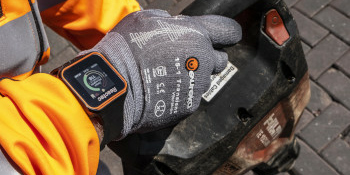
The HAVmeter is a digital mobile solution that automates the tracking and reporting of tool usage, performance, operator activity and hand arm vibration (HAVS) exposure calculation. It provides a unique insight into company activity and clearly identifies cost savings by reporting redundant or poor performing tools and unnecessary maintenance. More accurate monitoring of HAVS exposure, compared to paper based methods also increases tool operator efficiency by an average 25%. The HAVmeter helps employers and operators manage HAVs more easily and cost effectively than any other method and is lower cost than a paper based system.