When you introduce a new tool, technology, or process to a fast-paced and dynamic work environment, the key to maximising adoption and uptake is ease of use. Said otherwise: the easier something is to use, the more likely it is that people will actually use it.
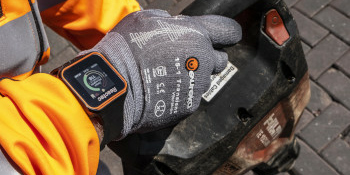
Recently, we’ve introduced Bluetooth tool tags which eliminate the need for workers to manually scan a tool tag before data from the tool can be transmitted to the R-Link smartwatch. The option to use Bluetooth tool tags helps to simplify and streamline calculations for hand-arm vibration (HAV) exposure based on the expected vibration performance of a tool. This technology enables fully automated, seamless data collection by making it easier for workers – particularly those who switch tools often, or who operate in fast-paced environments – to accurately measure their exposure to risk from HAV.
In this article, we’ll review how BLE technology compares to RFID (manual) tool tagging, and explore the benefits of this technology for encouraging uptake and adoption of risk management technology.

Bluetooth (BLE) Tool Tags: Hand-Arm Vibration (HAV) monitoring has never been smarter or simpler with R-Link
Bluetooth Tool Tags vs. RFID Tool Tags: Key Differences
RFID (Radio Frequency Identification) tool tags are small devices which are mounted to vibrating equipment. They are programmed with tool-specific data which is transmitted to the R-Link smartwatch to track usage and vibration data. To use an RFID tool tag, workers must manually scan it when they start using a tool, and must consider whether to switch the device off if they aren’t moving the tag to another tool.
In organisations where workers are diligent about tagging and scanning, RFID tool tags are proven to work very well. Moreover, RFID tool tags are more affordable than BLE tool tags, making them a great option for more budget-conscious teams who reliably tag and scan their vibrating tools.
BLE tool tags, on the other hand, require no manual scanning whatsoever.
Similar to RFID tags, BLE tool tags are mounted on a tool, in a spot where it can detect vibration When a worker wearing an R-Link smartwatch uses the tool (by pressing the trigger), the watch automatically senses the vibration and then searches for a nearby BLE tag. The BLE tag then transmits the tool’s usage and vibration data to the watch. Because this entire process happens
automatically, there’s no need for a worker to consider what they need to do when leaving a tool as they are automatically disconnected from the tool. And while BLE tool tags are more expensive than RFID tags, many teams prefer the convenience of this sleek technology.

Automatically capture HAV exposure risk for your workforce
Three Key Benefits of BLE Technology
BLE tool tags enable easier HAV monitoring in fast-paced working environments
For teams operating in fast-paced, dynamic work environments, BLE tool tags enable faster, more efficient tracking of tool usage and vibration data. With BLE tool tags, workers don’t have to remember to tag and scan tools as they switch between tasks. This is particularly useful for workers on field service teams (such as utilities teams) who are focussed on completing a complex or time sensitive task.
BLE tool tags can increase adoption and use of key risk management technology
BLE tool tags don’t require workers to manually tag and scan. This means that workers can simply go about their tasks without worrying about whether the tool they’re using is transmitting data to their R-Link smartwatch. By enabling workers to remain solely focussed on the task at hand, BLE tool tags aren’t just streamlining how key health and safety data is transmitted, they’re also making it easier for organisations to deploy risk management technology with the peace of mind that it will actually be used.
BLE tool tags contribute to a workplace culture where safety is built-in
BLE tool tags make it effortless to track tool usage and vibration data. Workers don’t have to take any extra steps in order to use the technology, which means that – just by doing their jobs – they’re contributing to a deeper and broader understanding of an organisation’s risk landscape. Simply by using the same vibrating tools that they use every day, they’re helping to harness data and insights that their teams can use to create safer, healthier workplaces.
– – –
Bluetooth technology is transforming how organisations monitor, manage, and improve their workers’ exposure to risk from vibration.
By making it easier for individual workers to engage with risk management technology and benefit from it, BLE tool tags are a key component of a modern approach to occupational health and safety strategy.
To learn more about BLE tool tags, just get in touch with a member of our team.