Workplace dust can accumulate in virtually any environment. Whether your teams operate outdoors or indoors, dust poses an often invisible – but very real – threat to their safety and wellbeing. When organisations contemplate occupational dust, many think of outdoor environments, such as construction sites. But the reality is that dangerous dust can accumulate anywhere, even when precautions are taken.
During the colder months, dust can become even more problematic: airflow indoors is often reduced as windows and doors are kept shut against the cold. While rain can help to settle outdoor dust, the reality is that dust remains a year-round challenge for teams who operate indoors.
In this article, we’ll review the dangers posed by occupational dust, and outline how teams can protect themselves in environments and conditions where dust has not traditionally been a front-of-mind risk.
The challenges of occupational dust monitoring and management
Dust is a notoriously difficult workplace risk to monitor and manage. Dust is often invisible, and very challenging to contain. Moreover, different people experience the impact of dust in greatly different ways. The harm caused by exposure to dust ranges from skin irritation to cancer, and it’s difficult to determine what dust - or how much - will cause which problems for any specific person. It’s also difficult to reliably predict when the effects of dust will be felt: many workers won’t experience the damaging effects of exposure to occupational dust for years after the exposure takes place.
But when the effects are felt, the results can be devastating: Each year in the UK, about 12,000 people die from diseases linked to past exposure to dust at work. Even with careful planning and preparation, including dust suppression and extraction, workers may still not be adequately protected against the dangers of occupational dust. One of the reasons why this is the case is due to the fact that dust poses a risk to workers even after the activity which causes the dust has ceased. Unlike vibration or noise, which end when the activity causing them ends (e.g., when noisy or vibrating machinery/equipment is shut off), dust can linger in the air for up to 20 days after the activity causing it has ceased.
For these reasons, monitoring and managing workers’ exposure to occupational dust is a very challenging task – one that’s made worse by the fact that many teams don’t fully appreciate where occupational dust actually accumulates, and what conditions can make an environment even more dangerous.

Thinking beyond construction sites: the surprising environments where dangerous dust can accumulate
It’s widely accepted that construction sites are dusty environments where precautions against exposure to dust should be taken. But many businesses operate dangerously dusty workplaces without even realising it. Manufacturing shop floors, commercial kitchens, bakeries, salons, barbershops, and more can all become dangerously dusty when the right controls and ways of working aren’t put in place or enforced. Moreover, certain conditions can cause dust to accumulate, or prevent it from dispersing as it normally would: during the colder months when air flow is restricted, for example, it’s important that teams take additional measures to address dust at work.
In sum, it’s critical for employers to overcome their assumptions about occupational dust and educate themselves about how dust can can be generated, and the ways in which it can accumulate.
Traditionally, employers have relied upon third-party risk assessments to keep their workers safe from dangerous dust. On the front lines, the use of PPE, suppressors, and extractors are the standard recipe for dust safety at work. But even where these measures have been taken, dust can still pose problems: ill-fitting PPE, or the wrong kind of suppression or extraction method can actually render workers even more vulnerable to potentially dangerous amounts or types of dust. And these methods – while helpful – don’t actually provide organisations with any insight whatsoever about their dust environment, or workers’ exposure to risk from dust, in real time.

Adopting a modern approach to dust monitoring for better awareness, and better worker outcomes
The only way to fully understand your workplace risk environment with regard to dust is through personalised monitoring and powerful analytics. With real-time insight into your workers’ exposure to risk from dust, you have the information you need to make informed decisions that can keep your team safer, and healthier.
While worn, a personalised dust monitor captures data about your workers’ dust exposure levels in real-time before automatically sending it to a powerful analytics platform where its transformed into actionable insights that help you better understand your risk environment, and what you can do to make it safer. Information about workplace or operator hotspots provides invaluable insight into were your controls are working, and where they’re failing. With this kind of concrete data, you can take action that will have an immediate and positive impact for your workers.
Over time, this data can reveal trends that can shed light on changing workplace conditions and practices. For example, you might see an increase in dust exposure levels during the colder months – from there, you can investigate whether your workplace is properly ventilated, and whether your workers’ PPE is appropriate for colder temperatures. You might also identify areas where you didn’t think dust was an issue, such as indoor areas or vehicles where you hadn’t previously thought about dust as a pressing risk.
Ideagen Reactec + Trolex: helping teams confidently combat dangerous dust
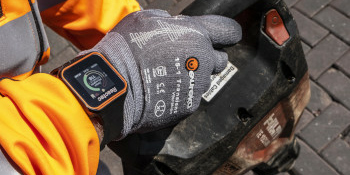
Trolex are pioneers in safety technology. The Trolex XD1+ is designed to be the lightest weight, most practical personal dust monitoring technology on the market. With no filters, pumps, tubes, or replaceable parts, the XD1+ is incredibly compact and easy to use. Workers only need to switch it on and secure it in place, and they’re ready to get to work. Crucially, workers can pair their XD1+ with their R-Link watch to view their own dust exposure levels right on their watch face. This enables incredibly fast decision-making, enabling workers to respond more immediately to real-time exposure data.
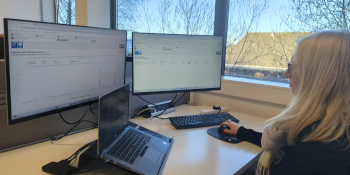
Plus, individual workers’ exposure data is stored and analysed in Ideagen Reactec’s ultra-secure, powerful Analytics platform where it’s transformed into actionable intelligence that drives better, more informed decision-making. With this unprecedented level of insight, teams can easily identify patterns, trends, and hotspots, and respond by adjusting their ways of working, or by improving controls.

To learn more about the partnership between Trolex and Ideagen Reactec, you can visit this page.
Use the form below to reach our team directly.