Do you gamble with HAVS?
What kind of gambler are you and what are your odds?
- I don’t think we’ve a HAVS risk
- It’s somewhere on my to-do list
- We’ve a manual paper system
- Use the HAVmeter solution
1. I don’t think we’ve a HAVS risk
This seems to be a very popular gamble even though this may be down to ignorance or apathy.
This usually is found in “lack of responsibility”, “non responsibility” or simple absence of awareness.
A quick way to test if this gamble is a good one is to simply do a few basic checks. Unless you have done these the gamble has poor odds resulting in the chance of loss of earnings, credibility and above all risking not only company but employee welfare.
Do your employees regularly and frequently work with vibrating tools and equipment and/or handle vibrating materials. Also how long are your employees exposed to vibration and at what level? See the end of this article a simple guide so see if you will probably need to do something about vibration exposures.
2. Its somewhere on my to do list!
Negligence is worse than ignorance. This is a bold gamble and requires nerves of steel as it usually means the risk is recognised but the odds on waiting for a claim to happen is outweighed by other more pressing budget requirements. HAVS might not be that high up on your to do list but its priority number three for the HSE behind death and work-related accidents. Also the number of HAVS related claims are increasing with 1046 new cases last year, at around £70,000 an average claim.Testing and tagging your plant for vibration output and health screening, training and educating employees on why they should support HAV monitoring is certainly a challenge.
Due to more pressing issues taking the risk and ignoring a HAV management policy until something happens is not the best option.
3. We’ve a manual paper system
This improves your odds as you are doing something to reduce the risk of your gamble. The problem is it gives a false sense of security as HSE guidelines state this is adequate when really you’re gambling on odds that legally and financially don’t stack up.
The perception of companies who gamble on the understanding that a paper based system to manage HAV is a low cost option, in-line with HSE guidelines and easy to setup and manage is flawed. Thinking everyone understands how to use pen and paper so training will be kept to a minimum has unfortunately proven to be quite the opposite.
Monitoring HAV exposure across the workforce has created an administrative burden of considerable proportions. Keeping records of the time each employee spends on vibrating tools by asking them to fill in paper log sheets is problematic. Partly because of the very nature of the industry makes it impossible for a tool operator to do more than provide a rough estimate of their tool usage. Vague estimates contribute to somewhat spurious calculations, compromising the validity of the time and money spent collating and processing the information gathered. This lack of accuracy exposes company and operator to a HAVS risk and that make the odds not good.
4. Use the HAVmeter solution
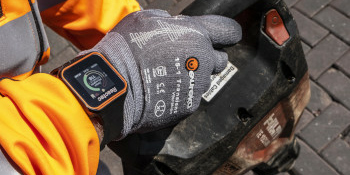
The HAVmeter solution substantially moves the odds into your favour and can reduce the risk. So how does the HAVmeter solution improve your odds? Gambling on the welfare of employees is never a good thing and reducing this risk can only improve workforce welfare and efficiency.
Businesses will always assess risk against cost. Ideally all Health and Safety Managers would prefer ‘zero harm’ but in the real world this is something many are still striving to achieve. E.g. Balfour Beatty Regional Civil Engineering have made the HAVmeter solution mandatory to all subcontractors when working on their sites.
The HAVmeter solution goes a long way in protecting employees and companies against the risk of HAVS by removing the complexity and administration of monitoring HAV exposure. Also the HAVmeter solution is unique in returning cost savings in H&S, asset management and operational budgets which help with the acceptance of best practise among employers and operatives.
The HAVmeter solution;
- Streamlines the whole process to remove administration overhead to lower ongoing cost
- Operator acceptance by using a simple and easy to use solution
- Reduce human error and improve accuracy by removing the need for operators to estimate tool usage.
- Accurately monitor exposure to reduce and protect against claims risk.
- Automate exposure reports to proactively manage HAV
- Streamlines workforce efficiency
- Reduces tool and maintenance costs
- Effortlessly stores employee exposure records
The HAVmeter solution streamlines HAV management, greatly reducing the guess work from vibration exposure by automatically measuring tool usage and exposure using the HSE points system. It also removes the operator from the recording process and therefore reduces human error. This tamper proof and auditable solution improves work force efficiency and accurately generates exposure reports instantly. All these benefits greatly improve your odds on protecting your company and employees against HAVS.
Following from point 1. I don’t think we’ve a HAV risk?
Here’s a simple guide taken from the HSE website to see if you will probably need to do something about vibration exposures if any of the following apply;
Do your employees complain of tingling and numbness in their hands or fingers after using vibrating tools.?
Do your employees hold work pieces, which vibrate while being processed by powered machinery such as pedestal grinders?
Do your employees regularly use hand-held or hand guided power tools and machines such as:
Concrete breakers, concrete pokers;
- Sanders, grinders, disc cutters;
- Hammer drills;
- Chipping hammers;
- Chainsaws, brush cutters, hedge trimmers,
- Powered mowers;
- Scabblers or needle guns?
Do your employees regularly operate:
Hammer action tools for more than about 15 minutes per day; or
Some rotary and other action tools for more than about one hour per day?
Do you work in an industry where exposures to vibration are particularly high, such as construction, foundries, or heavy steel fabrication/shipyards?
Which jobs and industries are most likely to involve hand-arm vibration?
Jobs requiring regular and frequent use of vibrating tools and equipment and handling of vibrating materials are found in a wide range of industries, for example:
- Building and maintenance of roads and railways;
- Construction;
- Facilities/Estate management (eg maintenance of grounds, parks, water courses, road and rail side verges);
- Forestry;
- Steel/Foundries;
- Heavy/Civil engineering;
- Manufacturing concrete products;
- Mines and quarries;
- Motor vehicle manufacture and repair;
- Public utilities (eg water, gas, electricity, telecommunications);
- Shipbuilding and repair.
What kinds of tools and equipment can cause ill health from vibration?
There are hundreds of different types of hand-held power tools and equipment which can cause ill health from vibration. Some of the more common ones are:
- Chainsaws;
- Concrete breakers/road breakers;
- Cut-off saws (for stone etc);
- Hammer drills;
- Hand-held grinders;
- Impact wrenches;
- Jigsaws;
- Needle scalers;
- Pedestal Grinders;
- Polishers;
- Power hammers and chisels;
- Powered lawn mowers;
- Powered sanders;
- Scabblers;
- Strimmers/brush cutters;
- Whacker Plates