Five million users of hand- held or hand- guided power tools.
Over one million users are at increased risk of disease because they are exposed to HAV above the action level set by the Health & Safety Executive (HSE).
300,000 people are estimated to have advanced symptoms of vibration white finger.
Effective from October 2012, the HSE ‘fee for intervention’ charge comes into effect. The Government has agreed that it is right that those who break the law should pay their fair share of the costs to put things right – and not the public purse. So what is this law and how clear is it?
Risk management is an integral part of running a business and companies need to be aware that by not having the right plans in place, they are running the risk of not only failing to support workforce welfare but losing money and damaging their reputation if a situation arises. Accidents at work are a big reason why companies should be managing risk effectively.
With the number of Hand Arm Vibration claims rising, health surveillance is not 100% effective and paper based HAV monitoring proves to be ineffective against claims; companies are under more pressure than ever to secure the welfare of their workforce and company from HAVS risk…whilst reducing cost.
The HSE guidelines stipulate a company’s legal requirements to protect their employee’s welfare but constant monitoring of tool operators is not required. This can lead to misunderstandings on how to effectively monitor exposure to HAV. HSE guidelines are just guidelines, the minimum level required and do not prescribe tactical implementation on many key areas. The guidelines are not always clear and a company can have 60 HAVS claims and not be penalised by the HSE if supporting ‘reasonable’ HAV management procedures whilst a company with 1 HAVS claim can be fined heavily by the HSE due to poor HAV management procedures and non-compliance? Litigation is also a main driver in risk versus cost and acts as a strong business case to protect against risk.
Companies can often find themselves in compromising situations as a result of not taking sufficient measures to help prevent staff becoming victim to HAVS.
If businesses don’t give staff the right tools to use in terms of health and safety, it can more than likely end up the fault of the company, which can lead to employees taking legal proceedings against their employer.
An employer takes on the responsibility of an employee’s HAV history so it is important to be able quantify their health status to assess safe tool usage. It is common knowledge that employee education is essential and vibration reduction through tool training and working practises are required to minimise vibration exposure. What is more difficult is to maintain and manage these procedures over time to remain compliant to HSE guidelines. It is also not uncommon for operators to be exposing themselves to harmful levels of vibration outside of working hours for example gardening, DIY or sports activities, which can contribute to the build-up of HAVS.
Measuring tool vibration is also problematic due to the varying vibration levels produced from the same tool over a period of time due to wear and tear or frequency of maintenance. Also dependant on what activity a tool is used for and the surface which it is operating on greatly varies the vibration levels, for example working on concrete or tarmac.
So how do you really measure exposure and where and when is enough really enough? The cost versus risk is the benchmark for some companies whilst others wish to achieve the best welfare support. If all H&S laws were revoked tomorrow the H&S budget of many companies would be reduced dramatically and remaining Health & Safety policies would only exist if they saved cost. This may seem extreme but many companies only support the required precautions and no more. Again this is proving to be a false economy.
Due to more pressing issues taking the risk and ignoring a HAV management policy until something happens is not the best option. Also paper based monitoring is highly inaccurate due to human error and manipulation increasing exposure to claims. So what are your options?
- Streamline the whole process to reduce administration overheads.
- Reduce human error by removing the need for operators to guess tool usage.
- Accurately monitor exposure to reduce and protect against claims risk.
- Automate exposure reports to proactively manage HAV.
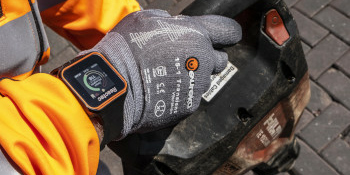
Reactec’s HAVmeter solution streamlines HAV management, greatly reducing the guess work from vibration exposure by automatically measuring tool usage and exposure using the HSE points system. It also removes the operator from the recording process and therefore reduces human error. This tamper proof and auditable solution improves work force efficiency and accurately generates exposure reports instantly.
HAVmeter is the UK’s leading system for monitoring vibration exposure and, in addition to being offered by major hire firms is used by many of the country’s biggest construction, manufacturing and grounds maintenance companies including Balfour Beatty, Tarmac, Aston Martin, and Crown Estates.