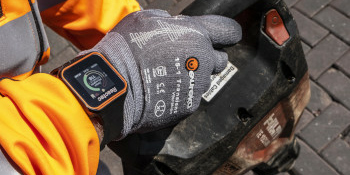
Hand Arm Vibration Syndrome (HAVS) is the result of over exposure to vibration equipment – such as power tools, diggers and grass cutters – and can include painful and disabling injuries of the blood vessels, nerves, joints and muscles in the hands. However, it’s not just the health and safety of workers that’s at stake. For employers, it result in hefty compensation claims and reduced productivity through sickness and absence.
So how can local authorities and public sector bodies effectively monitor this exposure and minimise the risks of highway operatives developing Hand Arm Vibration Syndrome (HAVS)?
And what of the benefits for employers from effective monitoring? Business will benefit from a healthier workforce, but will also realise cost savings from more efficient tool allocation, worker productivity and the reduced risk of injury claims.
Getting HAVS management right
Many organisations struggle to maintain a HAV management policy due to its complexities or even keep it on their to-do list as it is seen as a lower risk than other issues.
Testing and tagging your plant for vibration output; health screening, training and educating employees on best practice and why they should support HAV monitoring is only the beginning.
The challenge is to create a procedure to monitor and manage HAV that is supported by all individuals and is realistic and reliable. Implementing a HAV monitoring system is a key part of this, while maintaining the quality of a monitoring system is paramount in supporting workforce welfare, meeting HSE guidelines and reducing business risk.
The cases of local authorities paying the cost are numerous. Last year, for example, a road worker sought compensation after being diagnosed with HAVS. The condition made it difficult for him to pick up small objects. In addition to this, the disease is also made worse by further use of vibrating tools, meaning that the 46 year-old was unable to continue in his field of work. Because his employer had failed to follow correct procedures in the management of HAVS, it was found in breach of regulations and instructed to pay a £10,000 compensation settlement, and potentially much more in legal fees.
Ensuring buy-in to your HAV monitoring procedure from all levels of management is essential and clear procedures are required to support the flow of exposure data. Each group of stakeholders, from procurement and finance to healthy and safety, will have different benefits and the formats to convey these benefits will also differ.
Employers should emphasise that it’s not a big brother exercise, but better protection for employees against contracting the disabling condition. Using imagery displaying victims of HAVS is a powerful and memorable format to highlight the risks of living with the consequences of poor monitoring. And it shouldn’t just be an employer responsibility. Reminding operators that they are partly responsible for their welfare is important. The more accurately they record tool usage the longer they can work whilst better protecting them against HAVS.
Operators tend to over-estimate when guessing tool usage at the end of a shift or even fabricate the data to get it out of the way. Inaccurate data can result in operators being removed from tools that have higher levels of vibration and inhibit their ability to continue working during a shift or project, thus increasing the time of completion.
Many of the above benefits also apply to a team and Site Managers who wish to minimise workforce interruptions and additional workload. They are required on a daily basis to support exposure monitoring and collation of records.
More accurate data can mean not having to replace skilled personnel that overestimate their exposure levels resulting in delays and ultimately extending project timetables and cost.
So good record data can be obtained by informing all stakeholders of the benefits in helping create and maintain a good HAV welfare solution.
Reaping the rewards of effective HAVS management
This last point is an important one. Effective monitoring of HAVS has always traditionally been viewed as a health & safety solution, but it can provide employers with so much more, particularly when it comes to improving tool allocation and workforce productivity.
Knowing which tools have been used and for how long during a project helps Project Managers refine requirements over time for certain projects. Creating efficiency in plant allocation can dramatically reduce unnecessary tool, servicing and transportation costs. Accurate reporting on tool trigger time usage and performance provides a clearer overview to help plan efficient tool allocation and service requirements.
Being able to monitor operator tool usage and work practices can provide a company with invaluable intelligence to improve working performance and project strategy, resulting in potentially shorter project delivery timescales and cost reductions. Paper-based systems can disrupt operators and require significant administration resource and cost. Also using a paper-based system typically over-estimates operator exposure by up to 4 times, resulting in lower productivity. More accurate data improves workforce practice resulting in potentially shorter project timescales and tool requirements.
And last but not least, improving access to tool usage can reduce the incidence of tool theft, particularly on larger sites.
Taking all these benefits into consideration, the case for more effective HAV monitoring is compelling. It’s not just a case of mitigating against the risk of over-exposure, it’s about providing organisations with information that can help deliver significant cost benefits whilst ensuring worker health and safety.