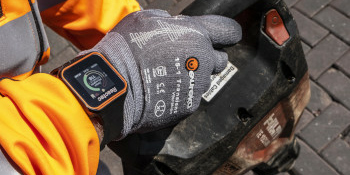
H.S.E. regulations mandate that employers need to “Protect workers’ health & safety from vibration exposure due to vibratory equipment transmitted by hand contact.” And for “Suitable health surveillance where the risk assessment indicates a risk to workers’ health is required.”
The H.S.E. also requires you to manage numerous actions to lower HAVS exposure which continual digital monitoring can better support above any other method. This article will explain how digital monitoring will help you comply and what to consider when assessing the best digital monitoring system to support your HAVS risk.
Section 1 – The Do’s and Don’ts of continuous monitoring
Section 2 – What the H.S.E. state you must do
Section 3 – How digital monitoring can help HAVS management
Section 1 – The Do’s and Don’ts of continuous monitoring
Why continuous monitoring?
The H.S.E. requires health surveillance to be carried out where employees may be at risk. They also advise against relying or even using constant or digital monitoring so how can this be achieved effectively in terms of accuracy, speed and cost? If the correct digital system is chosen it can not only better support H.S.E. requirements and guidelines but return an improved welfare and financial return which paper based monitoring cannot.
Digital monitoring must not be seen as a one stop shop solution to manage HAVS but it will provide accurate, reliable data on HAV exposure. Accurate data regardless of what you are managing is critical to making the right decisions and taking the correct actions. Accurate, accessible data/information should be the foundation of any management system. Your company’s board members would not make decisions based on knowingly inaccurate information or data? Also by employing continuous digital monitoring for a limited time period, as part of a risk assessment, at risk employees can be quickly identified and assessed/examined, without the need for costly and ineffective blanket assessment of all employees. This already saves time, cost and resources whilst providing better, timelier protection for those in greatest need.
You cannot manage what you can’t measure and bad data means bad decisions for your workers and your company.
How do you measure an improvement in your HAV management system if you don’t monitor? For example;
- Has the change in shift pattern reduced exposure?
- Has the purchasing of a different tool reduced exposure (lower vibration tool versus tool productivity/effectiveness)?
Do not think:
- Monitoring HAV is therefore managing HAVS risk;
- Simply keeping workers under the ELV level is enough to comply with HSE regulations;
- Digital Monitoring is expensive;
- Digital Monitoring is a one stop shop for HAVS management.
Do think that digital monitoring:
- Makes HAV monitoring easier;
- Through more accurate data will help you make better decisions and actions;
- Greater worker awareness and education of work/tool sharing;
- Reduction in workforce interruption;
- Help better manage HAV exposure reduction;
- Is lower cost than paper based monitoring;
- Improve worker welfare;
- Better protects your company against claims;
- Improves tool utilisation and cost.
Section 2 – What the HSE state you must do
- Decide how exposed to vibration workers are as part of a vibration risk assessment. Part of this may require a period of monitoring to understand how long workers may be exposed by monitoring tool usage.
- Once you know enough about the work to understand what the exposure is likely to be (and whether it is likely to exceed either the Exposure Action or Exposure Limit Value) your focus can shift to investigating, and taking, practical steps to reduce the exposure and the risks.
- If your workers’ exposure is regularly reaching the Exposure Limit Value, then you should be looking at doing the work in a different way. Restricting exposure to just below the Exposure Limit Value may still result in many workers developing hand-arm vibration syndrome (HAVS).
- Also note that it doesn’t mean you have complied with the law, or done enough to protect workers’ health just because your workers’ exposure is below the Limits specified by the HSE. A fundamental requirement under the regulations is that exposure is reduced to ‘as low as reasonably practicable’.
- Take positive action to reduce the exposure and the risks – e.g. change the work process to avoid the need to use hand tools, modify the work to improve ergonomics, change to better tools with lower vibration and good ergonomic design, maintain and look after the tools and consumables, train your workers. Make sure that the action you take results in real changes – monitor your systems and make sure work instructions are being followed. Don’t forget health surveillance for workers at risk, to pick up early signs of ill-health.
Section 3 – How digital monitoring can help HAVS management
- Obtaining more accurate data using digital monitoring will enable better decisions to help reduce exposure by identifying and modifying tools and working practises which could otherwise be overlooked or not be identified at all through inaccurate data.
- Digital monitoring can support the assessment of a HAVS risk as well as on-going review far better than paper based monitoring as it provides real-time monitoring to display when levels are reached to promote tool sharing and education on improved working practises. This means workers may never get close to dangerous levels on a daily basis and allows the operator to get on with the job knowing exactly where they are in relation to their allowable exposure at any point in a given shift. This knowledge empowers the operative and provides the personal assurance that they are not damaging their health whilst working. The points system encourages operators to become pro-active, actively looking for tool/job rotation or better planning of shifts etc.This involvement of the worker in Health & Safety is keenly supported by the Health & Safety Executive who considers it important for good Health & Safety. Paper based monitoring is only effective after the damage is done as levels cannot be estimated until after a shift or often weeks later.
- If using a paper based monitoring system it is recognised by the HSE to be prone to producing misleading data due to operatives not completing log sheets correctly. For example, writing the same information daily or simply copying a colleague’s exposure record. It is also frequently noted that some operators over estimate tool usage up to 80%. Digital monitoring measures the points exposure with trigger time accuracy and removes the worker from the process so no need to interrupt worker flow, removes administration and guess work to ensure data is collected easily and in a format readily available to view management reports.
- Ensure that your digital monitoring device does more than act as a stop watch and removes the operator from having to measure exposure time completely and that your chosen digital system can convert in real-time the exposure points in line with the HSE by knowing which tool is being used, by who, for how long and what is the tagged vibration output of the device.
- As stated by the HSE a number of digital monitoring system are expensive so again make sure they streamline the whole process to improve workforce efficiency, tool utilisation and remove all administration overheads so the solution not only helps improve worker welfare but returns a cost saving greater than the investment. That way everyone wins. Also if workers do not need to own personal digital meters but use only when required from a “pool” of meters this again reduces the investment required.
- Your company as well as your insurance company will rightly be concerned about its liability should your workers develop ill-health; you can show it what you are doing to minimise risks and prevent ill-health by means of your risk assessment and evidence of the practical actions you are taking. Digital monitoring will support this by easily showing actual tool usage and exposure levels as an auditable, tamper proof and accurate data system. So the more tamper proof the system improves protection against legal actions.
- THE REAL WORLD… There is never enough time to plan and risk assess every single job to the level of detail that would be required. Consider the day to day use and will it further help you risk assess to manage HAV exposure daily. It should save you time whilst providing wider reaching and more accurate data and information otherwise not possible to obtain.
So in summary the HSE advises against relying or even using constant or digital monitoring but if the correct system is chosen it can be the best solution to not only help to support HSE requirements and guidelines but return an improved welfare and financial return which paper based monitoring cannot.
Digital monitoring must not be seen as a one stop shop to manage HAVS but it will provide accurate and reliable data on HAV exposure and work activity. Accurate data regardless of what you are managing is critical to making the right decisions and taking the correct actions. Accurate, accessible data/information should be the foundation of any management system. Would a company board make decisions based on knowingly inaccurate information or data? How do you measure an improvement in your HAV management system if you don’t monitor, for example;
- Has the change in shift pattern reduced exposure?
- Has the purchasing of a different tool reduced exposure (lower vibration tool versus tool productivity/effectiveness)?
For more information contact Reactec, telephone 0131 221 0930, email info@reactec.com or online at www.reactec.com.