A working environment which runs smoothly – and one where employees can operate freely, without fear of injury or illness – requires intentional planning and a proactive approach to risk management. Organisations that take steps to better understand their total risk environment are those best-positioned to implement systems, processes, and ways of working that support better health and safety outcomes for workers.
To support a more proactive approach to risk management, teams operating in fast paced and dynamic workplaces – including plant floors, construction sites, and warehouses, for example – must address the issue of accidents involving pedestrians and moving vehicles or hazards. Such accidents are responsible for a significant number of fatal incidents and potentially fatal near-misses each year.
In this article, we’ll review how proximity warning systems can support safer ways of working, and drive more productive, more efficient workplaces.
Ideagen Reactec Proximity Warning System (PWS) for Workplace Risk
The keys to game-changing proximity technology
Proximity warning systems use a combination of workplace wearable technology and cloud-based analytics to increase situational awareness and reduce dangerous proximity to moving vehicles, machinery, and restricted areas.
These systems offer flexibility and functionality – including real-time proximity alerts and access restrictions – that support safer ways of working without slowing anything, or anyone, down.
Real-time proximity alerts:
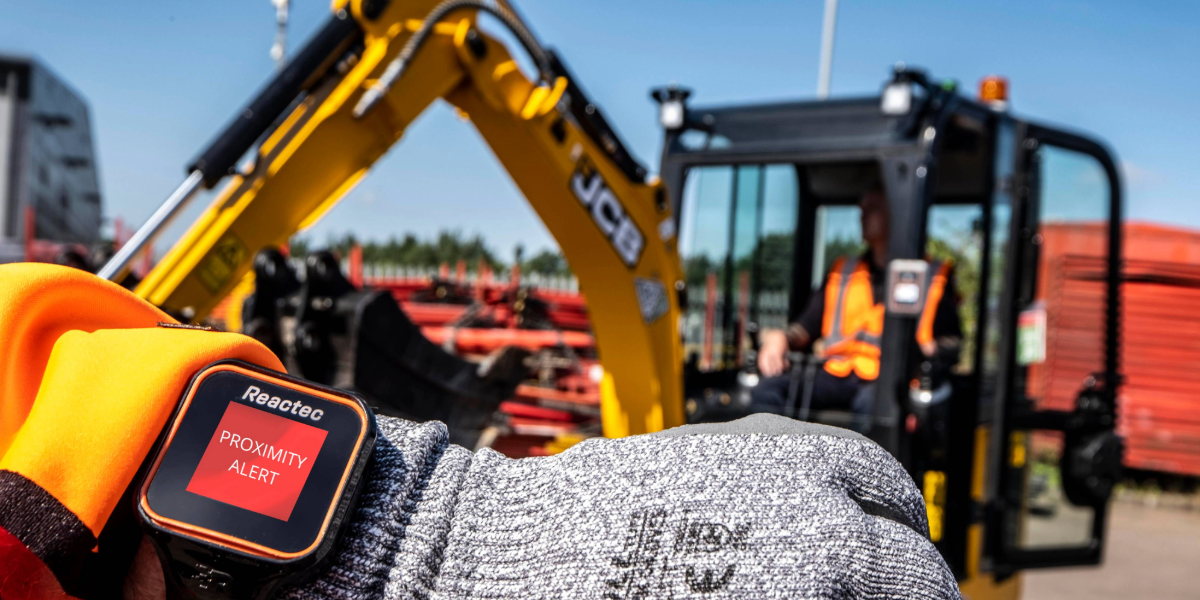
Real-time alerts and notifications warn workers when they’re in close proximity to a hazard. Today, the most advanced proximity warning systems use ultra-wideband technology to enable extremely fast and accurate detection. Not only do real-time alerts help to prevent accidents and near misses, they play an important role in enhancing situational awareness and supporting behavioural change: Enabling workers to stay aware of their surroundings, even if they’re in a busy environment or working on their own, empowers them to make more informed decisions that support safer ways of working.
Access restrictions:
Flexibility and customisation are crucial elements of an effective proximity warning system. In dynamic environments where roles or tasks can change throughout the course of a work day, it’s crucial to adopt technology that makes it easy to control proximity on a person-by-person basis. This functionality makes it possible to create safer workplaces without slowing down operations.
R-Link: Blending flexibility and functionality to support safer ways of working
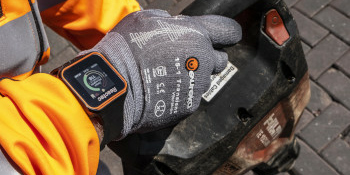
R-Link is Reactec’s third generation workplace wearable technology.
With real-time alerts and notifications, R-Link’s advanced proximity warning system helps avoid accidents and near misses while increasing situational awareness and supporting better ways of working.
When it comes to flexibility and customisation, R-Link supports safer, more streamlined operations. With R-Link, you can implement access restrictions that respond to an individual worker’s credentials. For example, you can allow access to certain areas and plant for equipment operators or essential personnel, while ensuring that non-essential personnel are restricted from that same area. Moreover, these credentials can be updated at any time, so that you can simply and easily control or update who has access to which areas or equipment on a day-to-day basis.
R-Link’s proximity technology ensures that different team members get different warnings and permissions based on their specific role and needs. The pedestrian watch is personalised to an individual worker with configurable alerts, while the driver watch (which auto-pairs to your vehicle) allows a vehicle operator to receive configurable warnings of pedestrian incursions, and give an electronic ‘thumbs-up’ to allow proximity when necessary, on an as-needed basis. And all of this is done right from the watch on the driver’s wrist.
Leveraging data to build a workplace where safety happens on purpose
Helping to avoid dangerous incidents is just part of the equation when it comes to proximity technology. Designing safer ways of working requires insight into the hazards and patterns of your workplace, and the behaviours of your workers. Armed with this information, teams can take meaningful and decisive steps that create workplaces where safety happens on purpose.
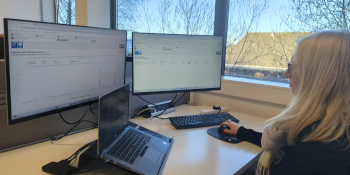
With Reactec’s powerful Analytics platform, data regarding exclusion zone incursions is collected and transformed into actionable intelligence, all behind the scenes and without any need for IT expertise or support. Attractive, easy-to-view dashboards are automatically created and distributed to duty holders and safety managers, who can review the data and make more informed, more confident decisions about how to design a safer, more efficient workplace.
— – –
Minimising your workers’ risk from dangerous proximity requires an intentional approach that’s data-driven, and proactive.
By adopting modern proximity technology, you can protect workers from moving hazards and dangerous areas in real time, while collecting the data you need to build a smarter, safer working environment for the future.
To speak with us about how proximity technology can support your team, just email us or use our live chat to connect directly with a member of our team. Live chat is available Monday through Friday during business hours.
You can also read about how Ferrovial Construction has adopted R-Link to improve the safety of employees working close to moving vehicles at Heathrow Airport.