Many companies struggle to maintain a HAV management policy due to its complexities or even keep it on their to-do list as it is seen as a lower risk than other issues.
Testing and tagging your plant for vibration output; health screening, training and educating employees on best practise and why they should support HAV monitoring is only the beginning. Short term/sub contractors and sole traders also add to the complexity in managing HAV risk. The challenge is to create procedures to monitor and manage HAV that is supported by all individuals and is realistic and reliable. Implementing a HAV monitoring system is a key part of this while maintaining the quality of a monitoring system is paramount in supporting workforce welfare, meeting HSE guidelines and reducing business risk.
The HAV monitoring procedure needs to be supported at all levels and clear procedures are required to support the flow of exposure data. Each group of stakeholders will have different benefits and the formats to convey these benefits will also differ.
Operator benefits need to state it’s not a big brother exercise but better protection for them against contracting the disabling condition. Using imagery and different types of media victims of HAV is a powerful and memorable format to inform operators of the risks and having to live with the consequences of poor monitoring. Also that they are partly responsible for their welfare is important and the more accurately they record tool usage the longer they can work whilst better protecting them against Hand Arm Vibration Syndrome. Operators tend to over-estimate when guessing tool usage at the end of a shift or even fabricate the data to get it out of the way. Inaccurate data will trend towards operators being removed from tools that have higher levels of vibration and inhibit their ability to continue working during a shift or project, thus increasing the time of completion.
H&S audits have clearly indicated problems with procedures, for example at any stage the quality of data can be distorted through human error, lack of understanding or unwillingness to participate with operators writing the same information daily or simply copying a colleague’s exposure record.
Many of the above benefits also apply to a team and Site Managers who wish to minimise workforce interruptions and additional workload. They are required on a daily basis to support exposure monitoring and collation of records. More accurate data means not having to replace skilled personnel that overestimated their exposure levels resulting in delays and ultimately extending project timetables and cost.
So good record data can be obtained by informing all stakeholders of the benefits in helping create and maintain a good HAV welfare solution.
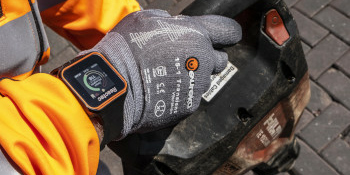
Obtaining good data is also reliant on streamlining the solution as much as possible, minimising human error and keeping the solution simple…easier said than done you may be thinking? Keeping procedures straightforward helps and the HAVmeter achieves this by automatically measuring actual tool trigger time, in real time. This removes the need for operators to manually record their activities, yet empowering them to take ownership of their well being. This provides a highly accurate and automated system to measure tool usage and the HAVmeter automatically translates the tool usage to HSE exposure points. The HAVmeter displays the level of exposure using an industry standard traffic light system and actual points accrued. This allows the operator to get on with the job and to know exactly where they are in relation to their allowable exposure at any point in a given shift. This knowledge empowers the operative and provides the personal assurance that they are not damaging their health whilst working. The points system encourages operators to become pro-active, actively looking for tool/job rotation or better planning of shifts etc. This involvement of the worker in Health & Safety is keenly supported by the Health & Safety Executive who considers it important for good Health & Safety – http://www.hse.gov.uk/involvement/
Gordon Dick, Site Manager of Waddington Fell Quarry also stated he had an all-round positive experience since introducing the HAVmeter to his work force stating “After starting with a paper based system to monitor vibration levels a few years ago, it was clear that this system wasn’t going to work, with time being wasted with my supervisors starting and stopping a stop watch and results not always being accurate.
“We have being using the HAVmeter for over eighteen months now and already we have seen big changes. Not only are we ensuring the safety of our valued workers, but we have seen up to 25 % reduction in vibration point’s value.
“The introduction of HAVmeters into our work force has meant we have taken a massive step forward in terms of the time savings we have made.
“There has been nothing but positive feedback from our employees, the HAVmeters are extremely easy to use and many of them feel the device has made their working life easier.”
In addition, an operator’s allowable exposure limits can be customised for individuals. This could allow operatives with early stage Hand Arm Vibration Syndrome who may have been banned from tool use completely to return to work but on a restricted and controlled basis. The combination of the reduced exposure limits and accuracy of the HAVmeter gives confidence that the operatives are working safely.
So the HAVmeter system only requires Site and Team Managers to ensure operators take a HAVmeter with them during each shift. It also removes human error and administration overhead to collate and compile records.
The HAVmeter solution removes many barriers of acceptance, keeping things simple but more importantly provide more accurate data and tools to better manage employees and company against HAVS risk.
Compared to its closest competitors Unilever NYSE