According to the HSE 10% of workers will in 12 years contract HAVS related diseases even when routinely exposed to around 100 points (Exposure Action Value). This shortens to 6 years if exposed to around 400 points (Exposure Limit value). With many employers limiting daily exposure to these points it’s no surprise that the Industrial Injuries Disability Benefit scheme states the most commonly prescribed diseases are HAVS related? This proves that all levels of vibration carry a risk and many UK workers are still being exposed to daily levels of harmful vibration.
A 10% risk means employers need to urgently reduce exposure to as low as reasonably practical before more workers become victims of HAVS.
HAVS management is not about keeping employees below exposure thresholds or working them to their limits but about lowering exposure continuously until it is removed. Many employers think by not exceeding 100 points it is safe, but all levels of exposure carry risks. That’s why everyone is responsible to manage and mitigate HAV risks and where there are ways to reduce risks from vibration, that are reasonably practicable, they should be done no matter what the risk level.
It is widely accepted that manual assessments of exposure in the workplace, using best practice, will have a high level of uncertainty and employees are also unlikely to be able to provide this information very accurately themselves. This is compounded by assessing exposure from a tools actual performance versus laboratory performance. All of this uncertainty can influence actions to reduce risk as well as measure their effectiveness at a later date. Further problems arise when trying to ensure controls are being adhered too and workers remain aware of HAVS risks and follow good working practises. Tools also need to be used correctly and maintained to a required standard.
All these issues (as well as limited time and budget) define what is “reasonably practical” to reduce HAVS risks. Hence digital monitoring is critical to reduce this significant uncertainty on true exposure and help expedite the mitigation of HAVS risks.
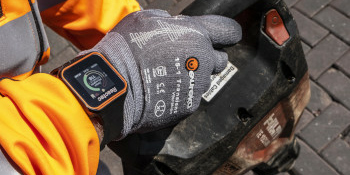
The Reactec Analytics Platform does this by helping employers not only streamline monitoring and management activities but reduces the margin of error by more accurately and consistently measuring exposure at a personal level. The Reactec Analytics Platform also provides information to help bring together all duty holders to design out exposure, support behavioural change and proactive occupational health screening.
More accurate assessment of representative risk
The HSE state a digital monitoring system helps quantify exposure assessment especially across multiple or complex work projects. The Reactec Analytics Platform removes the uncertainty of tool use by tracking accurately trigger time and tools used by which operators. Also by measuring actual tool vibration it can highlight which tools are producing unexpected excess vibration.
Assessments can define the controls required to mitigate HAVS risks so if a margin of error exists it will impact the effectiveness of controls and ultimately worker welfare. This margin of error can create unnecessary requirements on working practises and tool policy that also might impact productivity and employee litigation. For all these reasons reducing error will benefit a company’s sustainability (economic, legal and welfare) objectives.
Personalised protection
It can be difficult when assessing exposure risks to quantify each operator’s personal exposure, especially if it’s within a limited timeframe or if projects vary even slightly. Constant monitoring will reduce this sometimes vague estimation to provide a more accurate and personalised exposure protection. The Reactec Analytics Platform can also be personalised to an operators specific requirements (exposure thresholds can be reduced due to medical issues) to better support an individual’s medical background.
Health screening can become more proactive by identifying workers who more regularly exceed exposure thresholds and may require more frequent health screening than planned.
Support behavioural change
Employee awareness, training and responsibility of all duty holders are essential in lowering risks. Displaying to operators their real-time HSE exposure point’s calculation maintains awareness of risks related to tool use and encourages good practise. The Reactec Analytics reports are created and distributed automatically to all duty holders providing wider and easier access to information. The system helps increase awareness throughout a company of the measure of controls and activities to revise them. This enables managers to engage with employees and encourage them to voice their concerns and suggestions. Also to identify joint solutions to problems and follow guidelines that the workforce will more likely abide by, and in turn, demonstrate that the company values the importance of team work. This leads to more open dialogue during periodic health screening which is an essential part of combating HAVS. Ultimately, making communication a two-way process will improve relations between employers and employees.
Measure the results of risk reduction activity to aid continuous reduction
There is little point in deploying actions to reduce risks if they cannot be measured. Further sampling will again provide potentially vague data to compare against the initial vague data, whilst health screening can only measure a rise or decrease in new or increasing HAVS symptoms.
The HSE state a digital monitoring system helps audit the success of planned controls. By accurately measuring vibration and exposure trends across work activities and even operators, the effectiveness of an action plan can be more confidently reviewed to support changes that are accountable.
The Reactec Analytics Platform helps companies not just more easily and accurately manage HAV risks across all projects, departments and individuals but to more effectively design out exposure at all stages of a project from initial design and planning to development and delivery.
Reduce the margin of error to reduce the risks.