I was delighted to see that HS2 has created a new occupation health standards document – W1 1150 Occupational Health – to ensure a standard safety culture is created throughout the delivery of HS2. This is extremely significant for the industry as it sets a clear benchmark for health standards on major construction projects going forward and demonstrates HS2’s clear commitment to employee health .
The proposed High Speed 2 (HS2) project will be the UK’s largest infrastructure project creating high speed rail links from London, Birmingham, Manchester and Leeds. The project is expected to offer a staggering £11bn of major works civil engineering contracts which raises the need for consistent health and safety standards from the beginning.
Emma Head the Corporate Health and Safety Director for HS2I commented on the standards document in an article recently stating the “focus over the last 12 months has been to define what this means in reality for HS2 Ltd and for our contractors, through identifying our clear, measurable health and safety commitments so we can articulate the legacy we will leave for health and safety.”
My particular area of interest in this document is the importance it places on the recording of personal health exposure for their ‘Passport Scheme’. The key word for me is ‘personal’. This is very important as there is currently limited technology available to consistently record the personal health exposure risks of individual construction workers. The industrial disease Hand and Arm Vibration Syndrome (HAVS) in which I specialise, is one of the most common industry diseases within the rail sector as stated recently by Claire Dickenson from the ORR, and the impacts are permanent and life changing. Making an impact on this risk will be possible with a diligent and robust approach to the standards laid out by HS2.
The document goes on to state “The Contractor implements appropriate control measures and undertakes detailed monitoring to evidence their achievement. The Contractor reviews and analyse the data resulting from the monitoring and proactively look for opportunities to reduce exposure to health hazards and risk”. Delivering the HS2 standard really requires a digital monitoring system with latest cloud based technology to provide efficient data capture and evidence of risk management across multiple sites.
There are systems for accurately measuring the tools vibration but none could really be considered practical for everyday use while real world tool use can lead to extremely significant differences in the actual personal vibration level experienced on a day to day basis.
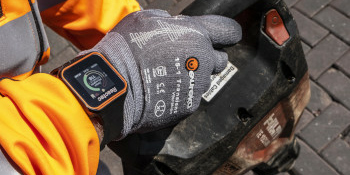
There is only one practical system to realistically assess and support ongoing risk reduction of HAVS which is the Reactec Analytics Platform. Not only is it practical but it senses the personal risk faced by the tool operator as opposed to the risk expected from use of the tool and transforms the monitored data into business information that can drive risk reduction activities.
The Reactec Analytics Platform, provides a more representative assessment of vibration risk experienced by a tool operator and, for the first time, the ability to understand what is actually happening during live tool use. Coupled with latest encrypted and secure, cloud based data reporting Reactec can support the delivery of the HS2 standard. A standard setting a challenging new bench mark for occupational health standards and Reactec look forward to working with companies to ensure that they can meet the challenges.