The Health and Safety Executive places great emphasis on the value of informing, educating and involving a workforce in health and safety matters. In principle, it’s a no brainer. Involving those workers who are most at risk from a specific health and safety threat, and who are well placed to suggest ways of guarding against those risks, would seem to be the obvious thing to do. However, the most obvious course of action is not always the most common course of action.
Certainly, when it comes to Hand Arm Vibration Syndrome (HAVS), businesses who have not informed, educated or involved their workers risk paying the price through increased incidence of HAVS, compared to employers who choose to proactively manage the risk in partnership with their staff.
The Law
So what is required of employers by law? While managers remain responsible for health and safety in the workplace, the law does dictate that workers must be consulted on the practices in place. The relevant laws – The Safety Representatives and Safety Committees Regulations (1977) and The Health and Safety (Consultation with Employees) Regulations (1996) – are in place in order to guide the implementation and development of effective health and safety measures. Reviewing your arrangements on a regular basis will help to ensure legal compliance and avoid the costly consequences of improper management; the Health and Safety Executive and local authorities regularly make inspectional visits to the workplace and can impose significant consequences for failure to observe legal requirements.
Communication: a simple two-way process
The law places duties on all those involved in work practises from clients and designers to contractors and workers so everyone has a role to play. The Health and Safety Executive places great emphasis on the value of informing, educating and involving a workforce in health and safety matters. By giving employees the opportunity to voice their concerns and suggestions, you’ll identify joint solutions to reduce vibration exposure and your workforce will more likely abide by, and in turn, demonstrate that you value the importance of team work.
Ensuring that you take on board feedback and ideas from your staff, as well as communicating your own intentions and the reasons behind them, will ensure a cooperative and collaborative approach, not just to health and safety procedures, but to working life in general.
A measure of controls are put in place to reduce risk and you need to ensure workers are made aware of these and for them to take some responsibility of the risk as well as their team leaders and managers. From good working practises to good tool use, maintenance and training, they all play a part in the plan to reduce exposure.
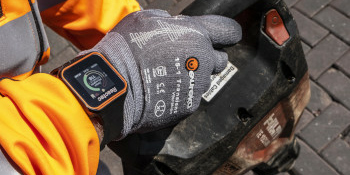
The Reactec Analytics Platform not only provides unique information but is a platform to involve all duty holders to broaden awareness, educate & inform.It involves the operators on a daily basis with a device called the HAVMETER which calculate real-time HSE points and action value thresholds. These indicators educate workers of the exposure risk in relation to tool use and to share the responsibility of their welfare.
Through the Reactec Analytics Platform responsibility is further shared from team leaders and depot managers to project and H&S Managers via easy access to the analytics online reports. These can be accessed by authorised employers providing easy access to risk reduction information which increases awareness throughout the company of the measure of controls.
The simple and concise reports helps employees understand HAVs risk and how to better manage it on a daily and management review level. Also that the company is demonstrating they value the importance of worker welfare and the effects of team work.
Authorised employees can automatically receive email reports each week of operator daily exposure level s and tool used to keep them updated on worker activity and threshold breaches. Alerts can also be sent when operators breach an action threshold to support proactive HAVs management.
By giving your employees the opportunity to voice their concerns and suggestions, you’ll identify joint solutions to problems and guidelines that your workforce will more likely abide by, and in turn, demonstrate that you value the importance of team work. Ultimately, making communication a two-way process will improve relations between employers and employees.
The business benefits
A happier, healthier and safer workforce will be far more engaged in the job and you’ll reap the benefits of improved performance and productivity, quality and efficiency. A balanced and well thought out health and safety procedure should result in weighty cost savings from fewer accidents at work, as well as a reduction in unnecessary absence and ill health. Anecdotal evidence suggests that businesses practicing worker safety involvement receive significantly fewer claims for work-induced health problems, and this is most likely a direct result not only of exemplary health and safety procedures, but also of workers abiding by those procedures.
The business benefits of worker safety involvement are backed by research conducted by the Health & Safety Executive (HSE)[1], which states that “accident rates are lower where employees genuinely feel they have a say in health and safety matters (14%) compared with workplaces where employees do not get involved (26%)”. Additionally, “more than three quarters (77%) of employees surveyed felt encouraged to raise concerns in a good health and safety climate compared to 20% who felt encouraged to do so in a poor health and safety climate”, and “among employers, awareness of slips and trips is higher when there is employee involvement (62%), compared to where there is no involvement (28%)”.
Most importantly, if the results are visible from within the business, they’re likely to permeate into the wider industry too – you’ll preserve credibility with customers and industry experts, helping to position the business as a best practice employer.