ISO/TS 22270: A new benchmark for vibration exposure monitoring
Workers in construction, manufacturing, utilities and infrastructure are exposed to vibration every day.
Managing that exposure has traditionally relied on trigger-time estimates, manual calculations and administrative processes. While these methods have helped organisations assess risk, they don't always reflect an individual's real-world exposure.
That's where ISO/TS 22270 comes in.
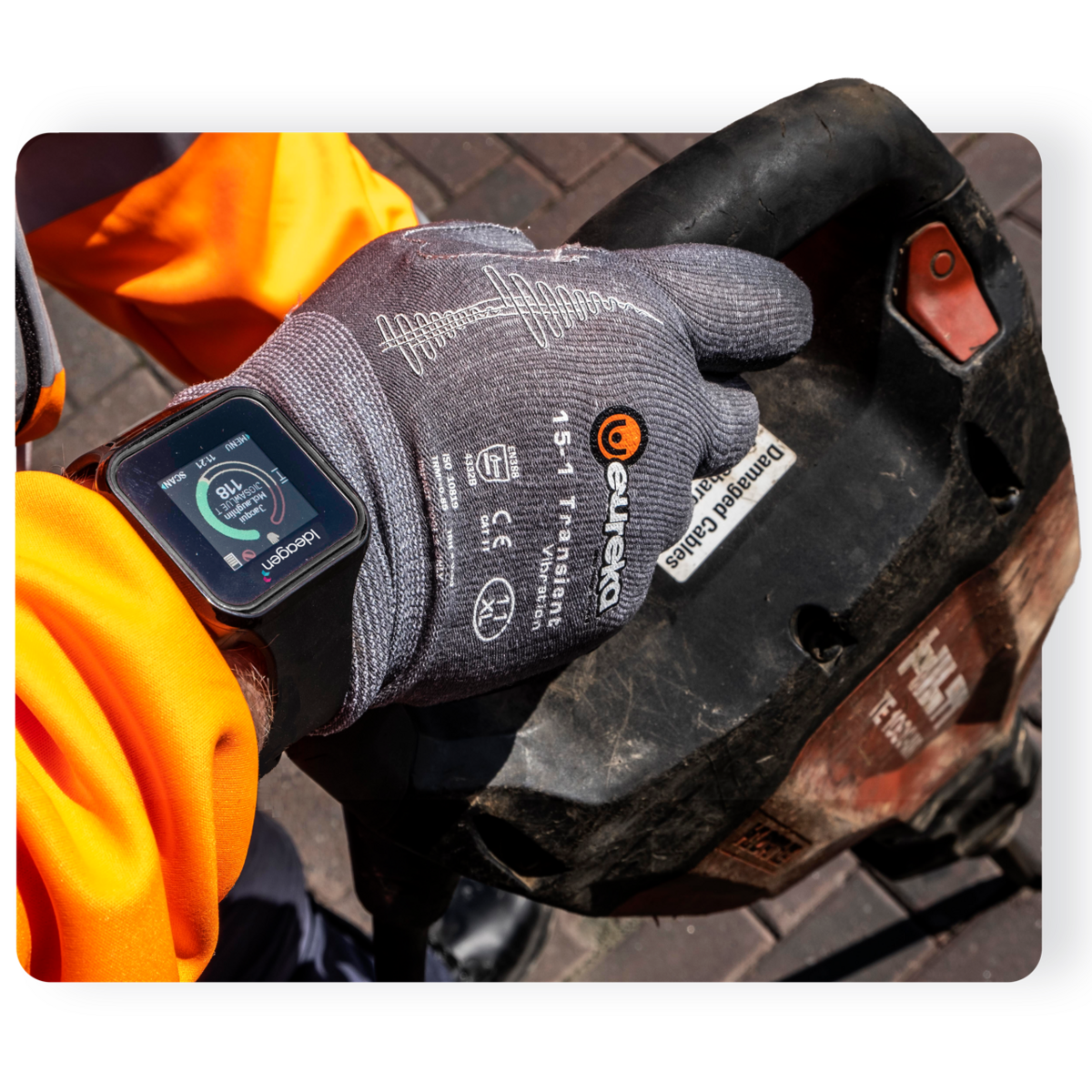
The publication of ISO/TS 22270:2026 marks an important development in vibration risk management. It provides practical guidance and minimum performance requirements for wearable systems that monitor hand-transmitted vibration directly on the worker.
For organisations looking to strengthen HAVS prevention programmes, ISO/TS 22270 represents a significant step towards more accurate, evidence-based exposure management.
What is ISO/TS 22270 and why was it introduced?
ISO/TS 22270 is an international technical specification for devices that monitor and measure hand-transmitted vibration on the hand, wrist or forearm. It was developed by ISO/TC 108/SC 4 to give a common set of minimum performance criteria for wearable HAV monitoring.
- Wearable monitoring: Devices worn by the operator record vibration exposure continuously during normal work.
- Varying methods: Devices on the market use different measurement and calculation methods, with results of differing reliability.
- Minimum criteria: ISO/TS 22270 defines the components and performance a device must have for its data to be suitable for HAV exposure assessment.
Device conformity to this technical specification is now the minimum performance requirement that organisations should insist on receiving from vendors of wearable hand arm vibration monitoring technology
Measurement method
A compliant wearable measures vibration on the body, then corrects and weights the signal to estimate vibration at the tool handle.
- On-body measurement: Three-axis acceleration measured at a defined wear location.
- Transmissibility correction: Per-axis correction for attenuation between tool grip and sensor.
- Frequency weighting: Hand-arm frequency weighting applied to each axis.
- Validation: On-body results validated against reference measurements on real tools.
What does a compliant device provide?
Personal vibration exposure data, measured on the worker during normal work, from a device assessed against defined international performance criteria.
What does ISO/TS 22270 mean for employers?
Organisations that manage vibration risk should view ISO/TS 22270 as an opportunity to strengthen their approach to exposure management.
Benefits include:
- Better visibility: Understand worker exposure with greater clarity and identify high-risk activities earlier.
- Improved risk management: Take action before workers reach harmful exposure levels.
- Stronger compliance assurance: Support occupational health programmes with reliable, evidence-based exposure records.
- Increased confidence in decision-making: Use real-world data to inform interventions, training and control measures.
How wearable technology supports vibration exposure management
Modern wearable monitoring technology enables organisations to understand exposure in real time.
Ideagen Wearable Safety helps organisations:
- Monitor vibration exposure automatically.
- Identify emerging risks.
- Generate exposure records.
- Improve audit readiness.
- Support HAVS prevention programmes.
By turning exposure data into actionable insights, organisations can focus on prevention rather than administration.
Supporting HAVS prevention
Preventing HAVS starts with understanding risk.
Real-time monitoring enables safety teams to identify trends, improve controls and support workers before long-term injury occurs.
Organisations looking to strengthen occupational health programmes should consider how worker-based monitoring can contribute to a proactive prevention strategy.
Learn more about preventing hand-arm vibration syndrome (HAVS).
The future of vibration monitoring
Occupational health continues to evolve.
Organisations are increasingly looking for ways to improve worker protection while reducing administrative burden and supporting compliance objectives.
ISO/TS 22270 reflects that evolution, encouraging a more data-driven approach to vibration exposure management.
For safety leaders, the question is no longer whether workplace exposure should be measured.
It's whether the data being used is good enough to protect workers and support better decisions.
Download the complete guide
Want a deeper look at ISO/TS 22270, what it means for your organisation and how modern vibration monitoring technology supports compliance?
Download our comprehensive ISO/TS 22270 whitepaper
Speak to one of our wearable safety specialists to see how Ideagen can help you protect workers and manage vibration risk more effectively.