Over recent months some local authorities have put aside millions for employee compensation claims and in February 2016, new sentencing guidelines came into force where company fines can now reach over £10 million for the most serious health and safety offences. The guidelines will apply regardless of the date of the offence.
Problem for councils The HSE state a manual risk assessment will have a high level of uncertainty and employees are also unlikely to be able to provide this information very accurately themselves. All of this uncertainty can influence actions to reduce risk as well as measure the effectiveness of risk reduction activities at a later date.
An exposure assessment is based on a series of estimations each with considerable margins of error equating to an overall margin that could typically exceed 300%. This can equate to operators deemed low risk, exceeding exposure limit values on a regular basis and risk reduction actions ineffective. All of this uncertainty can influence actions to reduce risk as well as measure their effectiveness at a later date.
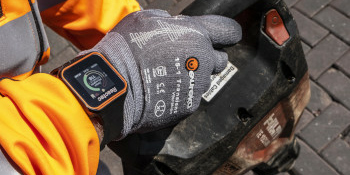
The HSE recently stated digital monitoring is useful to more accurately assess HAVs exposure, measure risk reduction activities and support behavioral change.
Reactec have helped over 60 UK local authorities deploy digital monitoring of vibration exposure to better protect employees and themselves from HAVS risks. Benefits from deploying a digital monitoring system Reduce the guess work to reduce the risk.
- Increased protection for workers
- More time and cost efficient compared with manual processes
- Helps support hand arm vibration regulations
- Encourages worker behavioral change towards HAVs risks
- More robust protection against HAVS claims
- More efficient tool use, maintenance and procurement
- Helps secure lowest insurance premiums
Download PDF article >> Local Authourity HAVS protection
Recent risk statistics and testimonials on how Councils have;
- Reduced claimant payments considerably,
- Achieved a more practical approach to reducing exposure,
- Raised awareness of HAVS risk amongst employees,
- Amended poor working practices and
- Cut tool costs.