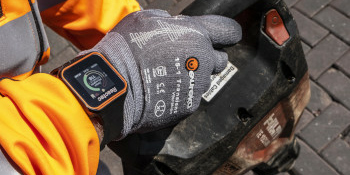
It’s widely accepted across the rail sector that Hand Arm Vibration Syndrome (HAVS) caused by exposure to vibration transmitted to the hand and arm is the dominant industrial disease and yet efforts to address have been challenging. Could it be that perceived difficulties in readily assessing the risk are hampering the industry’s ability to more effectively control the risk faced by their employees.
As stated in the January 2018 ORR occupational health programme update, effective management of hand arm vibration exposure continues to be a challenge as is shown through the volume of hand arm vibration syndrome cases reported to ORR under RIDDOR and from ORR inspections.
Risk management
Technology is readily available to simplify the assessment of HAV risk and support the identification of effective controls such as that evaluated by the Institute of Occupational Medicine (IOM). The IOM have published a study on how Reactec’s digital HAVWEAR system is easy to use and collects data which can be readily monitored over extended periods.
The IOM report goes onto state that, as the HAVWEAR system assesses vibration exposure during the entire use of the tool, it may therefore be more accurate than the use of trigger times and manufacturer’s data or other static data sources compiled for a limited range of tool activity.
Reactec believe HAV exposure data can be measured in a practical way so stakeholders are in a much better position to manage their risk based on actual data instead of estimations. The HAVWEAR systems unique ability to determine vibration exposure of the wearer helps identify HAVS risk which may otherwise be undetected.
For more information contact Reactec 0131 221 0930, email info@reactec.com,
Download IOM report – www.reactec.com/IOM_report