“There is no such thing as safe level of vibration,” according to Harry Gardner, health, safety and environmental consultant. “If you are working to minimum standards, you are just dicing with a guy’s health. We should always be striving to achieve the lowest possible level.”
The facts show there are real problems with the way we traditionally assess the risk of HAVS, the debilitating and irreversible condition caused by the impact of vibration from power tools, amongst other things. There are currently 300,000 sufferers in the UK – with another two million at risk, according to the HSE. Worryingly, although regulations forcing employers to protect their employees were released in 2005, the number of new cases reported in 2018 remains very similar.
The impact of HAVS is life-changing. Those who develop the condition suffer financially and emotionally. Symptoms can take between 6 months and 20 years to show themselves. In addition, it affects businesses who can lose key workers at a time of skill shortages as it is still the highest reported illness related RIDDOR. They also run the risk of significant fines which have increased by 300% in recent years, expensive personal injury litigation and even custodial sentencing if they fail to protect employees.
The industry is relying on methodologies and standards that are over a decade old to manage vibration in the workplace.
Reactec has launched a robust call for industry to go above and beyond in the fight against HAVS. A new report by leading journalist, Paul Wilkinson, The Hidden Risk brings together evidence and human experience to create a compelling call for action which goes beyond the current recommended guidelines.
There are serious issues with traditional assessment
Data from traditional assessments do not account for individual differences. The way people use tools, the intensity of the use and the condition of the equipment are all variables that can produce significantly higher levels of vibration than that assumed for risk assessments. In a study of 4,000 tool operators, a fifth had their risk underestimated by an average of 76%[1].
The Regulations (2005) are intended to tackle the HAVS problem. They require an employer to carry out suitable and sufficient risk assessments, to reduce and control the risk to as low a level as is reasonably practicable and to carry out health screening when required.
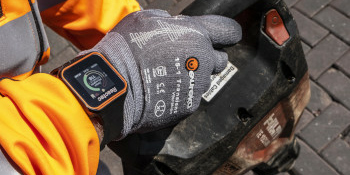
One answer is smart wearable monitoring technology. Wearable tech that measures real-time data is becoming the norm in everyday life – for example, running with a FitBit, and the same concept can be applied to help combat the risk of HAVS.
The tech provides a suite of analytics to empower managers with information to drive down future risk for employees. Armed with knowledge about each worker’s exposure and the performance of each tool, management can develop more effective controls to reduce exposure risk and take actions such as targeted training, redesigning projects or choosing different tools.
Mr. Gardner says: “I think digital monitoring is important and the analytical platform and the report that that produces are absolutely invaluable.”
It is time that industry went above and beyond and raised its game on hand arm vibration syndrome.
Join Reactec’s call to industry to do more to protect against the hidden threat of HAVS. Download the report here
- Utility Company case study – reviews the effectiveness of a generic risk assessment
- The Telegraph newspaper interview with Reactec on HAVS risk in the FM sector
- IOM report on the validity of the data produced by Reactec’s HAVWEAR to inform a suitable and sufficient risk assessment
- International Journal of Industrial Ergonomics paper on understanding the effectiveness of hand transmitted vibration measurement on the human