Workplaces are increasingly dynamic environments, and ensuring that your teams are adequately protected from dangerous levels of noise is more challenging – and more important – than ever. That’s why it’s important to stay informed about approaches to noise monitoring that can easily, effectively help reduce your workers’ risk of developing occupational Noise-Induced Hearing Loss (NIHL).
In this article, we’ll review the challenges faced by teams today when it comes to monitoring occupational noise, and explore what steps organisations can take to better protect the long-term hearing health of their workers.
The unique conditions and characteristics that impact worker hearing health (and why risk assessments fall short of addressing them)
Noise-Induced Hearing Loss is a permanent, disabling condition that affects over two million workers in the UK alone. Worldwide, 16% of disabling hearing loss can be attributed to exposure to occupational noise. Given these staggering statistics, it’s clear that a thoughtful and informed approach is required to adequately protect workers from potentially dangerous levels of noise at work.
Traditionally, organisations rely upon periodic third-party assessments to understand their workplace risk environment with regard to noise. On their own, such assessments function as snapshots - they’re useful for helping organisations understand their noise environment, but they can only provide a brief window into actual workplace conditions. Ultimately, these assessments are inadequate to meaningfully monitor and manage workers’ exposure to occupational noise - workplaces are simply too dynamic, and ways of working too varied, for this method to be effective, on its own.
For decades, risk assessments have been the standard throughout industries such as construction and manufacturing. Yet workers in these industries continue to experience the highest risk of occupational-related NIHL. The reality is that exposure to noise varies from person to person, even when they’re doing the same work, or using the same tool. Operator competency, type and fit of PPE, ear anatomy, and several other factors – including the frequency and nature of exposure to noise – contribute to the ways in which a person experiences - and is affected by - noise. These conditions and characteristics are unique and evolving, which means they can’t be captured and addressed by infrequent, arms-length risk assessments.
To ensure that workers aren’t being exposed to potentially dangerous levels of noise at work, it’s important to adopt an approach that goes beyond snapshots. When teams have accurate and reliable insight into their workers’ exposure to occupational noise, they can make decisions about controls and ways of working that actually make an impact.
Risk management that works: how modern solutions for noise monitoring enable safer, more productive work environments
When organisations have real-time, personalised insight into their workers’ exposure to noise, they can easily create safer, more productive workplaces. To access this type of insight, teams need to look beyond tick-box compliance efforts – including risk assessments and provision of PPE – and implement solutions that create an ongoing feedback loop between workers, health and safety managers, and the organisation. By adopting this approach, teams can put themselves in a position to constantly improve their controls, ways of working, and ultimately, health and safety outcomes for their workers.
At the crux of this more modern approach is a focus on building solutions that are as agile and responsive as the work environments they’re built to serve. Modern technology for occupational noise monitoring measures a workers’ exposure to noise from inside the ear. Traditional noise assessments, on the other hand, estimate personal exposure based on a calculation of the average amount of ambient noise that exists in a workplace. This distinction is critical, and the primary way in which modern solutions enable more effective risk management. Because with insight into individual workers’ actual exposure to noise, teams have the information they need to make decisions that actually move the health and safety needle.
But the benefits of a more modern approach don’t start and stop with improved health and safety outcomes for workers. When you’re able to more effectively monitor and manage your workers’ exposure to occupational risk, you create environments where productivity and efficiency are more easily facilitated. Said otherwise: when you measure data that actually matters, you’re able to more easily identify problem areas, operator issues, and workplace trends. And once you have this data, you can confidently make decisions that avoid or mitigate problems before they ever begin.
Ideagen Reactec + Smart Alert: a partnership built for action (not just assessment)
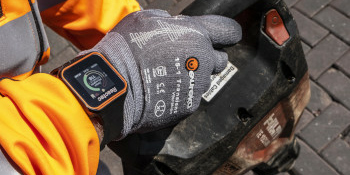
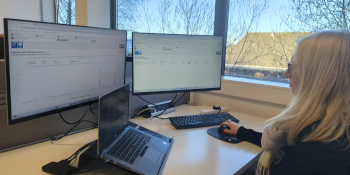
Smart Alert is a purpose-built solution for better noise monitoring at work. It’s lightweight, easy to use, and proven to deliver results. Smart Alert continuously monitors workers’ personal exposure to noise and alerts them to unsafe conditions, enabling in-the-moment course correction that drives safer ways of working, without slowing anything down. And in the background, Smart Alert can continuously and automatically send data to the Reactec analytics platform, where it’s transformed into actionable intelligence that health and safety managers can use to make informed decisions about controls and ways of working.
Taken together, Smart Alert + Ideagen Reactec offer teams the control and confidence they need to adopt a truly proactive approach to risk management with regard to noise. By unlocking access to more meaningful data and insights – not just snapshots and estimates – this partnership enables deeper understanding, and more effective action. And that’s important, because NIHL isn’t just debilitating, it’s entirely preventable, but not when teams rely entirely upon periodic, third party risk assessments to keep workers safe.

Smart Alert
To learn more about how Smart Alert + Ideagen Reactec is helping teams across the UK protect worker hearing health, you can visit this page.