When it comes to compliance with HAVS regulations, the regulatory ‘ask’ is to carry out suitable and sufficient risk assessments to promote the development of effective controls, in order to reduce the risk as low as reasonably practicable. And while there is an ISO standard – ISO5349 (‘the Standard’) – for assessing exposure to hand-arm vibration, it does not, in and of itself, ensure compliance with the Control of Vibration at Work Regulations (‘the Regulations’). The Standard includes important information on how to determine your workers’ risk from exposure to HAV and places an emphasis on developing controls to reduce the risk. However, the Standard was written 20 years ago, and it references a method for measuring exposure to HAV which is outdated and impractical to carry out during normal working conditions.
In this article, we’ll review ISO5349 – what it requires, and the quality of outcomes it can generate for workers. Next, we’ll review how HSE guidance in this area has evolved, and explore the most effective ways for measuring your workers’ exposure to hand-arm vibration.
Download the guide for better HAVS compliance
Bad data creates compliance risk. Learn what good looks like, from regulatory responsibilities to ALARP-based decisions, and how to get there.
ISO5349: what’s required by the standard, and does it go far enough to protect workers?
The internationally accepted standard for measuring exposure to hand-arm vibration is ISO 5349-1, which requires that vibration be measured where a vibrating tool comes into contact with a worker’s hand (i.e., the tool handle). Importantly, Annex D to this standard acknowledges that there are other factors present in a real-world work environment that can contribute to the amount of vibration experienced by a given worker that goes beyond what is measurable at the tool handle. These factors include the area and location of the parts of the hand which are exposed to vibration, operator posture, and grip force, just to name a few.
ISO5349 was originally introduced in 1986. It was replaced by the current version in 2001. In the two-and-a-half decades that have passed since then, major advancements have been made in our understanding of hand-arm vibration, and the impact it can have on long-term worker health. Technology has also evolved significantly, and ways of working have almost completely transformed. So while the Standard offers teams important context for understanding HAV exposure risk, adhering only to the dated measurement methodology within the Standard leaves organisations well short of meeting the requirements set out in the Regulations. Modern monitoring technologies can be much more effective for helping teams to assess exposure and refine their controls.
To bring ISO5349 into sharper historical focus: in 2001, we were still six full years away from the first iPhone release, AI was strictly theoretical, and Blockbuster was in its prime. The world – and the ways in which we interact with it – have completely transformed since then. So while HSE guidance has evolved over time, and while the regulations which govern controlling HAV exposure risk remain unchanged, teams today have access to solutions that enable them to work toward compliance in a much more efficient, affordable, and confident manner.
Put simply: ISO5349 provides a foundation for understanding worker exposure to risk from HAV, but it’s inadequate to reliably, representatively measure the amount of hand-arm vibration that a worker is exposed to in a modern real-world environment.
Additionally, adherence to ISO5349 requires that vibration measurements are taken at the point of contact on the tool handle in all three axes (using instrumentation compliant with ISO8041). This data must then be evaluated against exposure limits to determine whether and to what extent controls – including tool modification, job rotation, or training – should be refined. For accurate, reliable data, these measurements must also be evaluated against the tool's condition, operator posture and grip, and the type of material being worked on.
The process of manually collecting and evaluating data in this way is impracticable in most dynamic, fast-paced working environments. Yet, for decades, the HSE advised against relying on digital monitoring systems to support HAVS risk management. But in recent years, guidance has evolved to clarify the helpful role that monitoring systems can play in helping to create safer workplaces. Today, it’s accepted that devices such as R-Link can be a “useful tool for carrying out a risk assessment or for monitoring the preventive measures in place [with regard to HAV] to ensure that they are effective.” This, in turn, puts organisations in a much better place to demonstrate compliance with the Regulations and to more effectively reduce their workers’ risk of developing debilitating Hand-Arm Vibration Syndrome.
Why download the guide to better HAVS compliance
Poor data quality is the real compliance challenge. Our practical guide covers your regulatory responsibilities, the difference between HAV measurement and monitoring, and how representative data supports ALARP-based decisions.
Get your copyGoing beyond tickbox compliance: What’s really required to drive better outcomes for workers?
Employers who adhere solely to the measurement methodology within ISO5349 – measuring vibration with tool-mounted devices only – simply don’t have access to the total universe of information required to reliably control a worker’s risk of developing Hand-Arm Vibration Syndrome. So, even if they think they are achieving compliance, there is a distinct possibility that they have failed to meet the Regulations’ requirement of reducing risk as low as reasonably practicable, which means they’re unlikely to move the needle when it comes to achieving better health and safety outcomes for workers.
And this isn’t speculation – workplace injuries cost UK businesses more than £20 billion each year. When it comes to HAVS, it’s not uncommon to see employers fined thousands (and even hundreds of thousands) of pounds, for failing to put in place ‘adequate management arrangements to assess and monitor the exposure’ of employees to vibration.
For the most reliable, representative assessment of real-world, individual exposure to hand-arm vibration, employers must consider whether their attention to the Standard, on its own, delivers regulatory compliance. The key is to embrace solutions that paint a more complete picture of their risk environment. By adopting modern, streamlined solutions for risk monitoring and management at work, businesses can round out their compliance strategy, and reinforce their commitment to worker health and safety.

Ideagen Reactec R-Link Watch
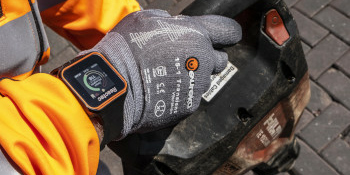
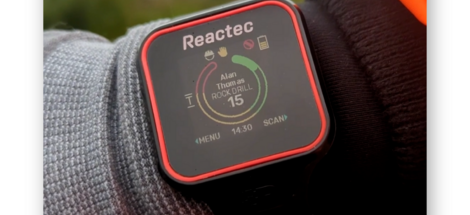
R-Link is purpose-built, cloud-powered technology for better risk monitoring and management. Underpinned by our powerful, secure Analytics platform, R-Link makes understanding your risk environment easier, enabling you to implement and improve controls with confidence. R-Link is worn on the wrist – a triaxial accelerometer monitors a worker's exposure to Hand-Arm Vibration (HAV) in real-time, and alerts the operator when they’re approaching or exceeding predefined personal exposure thresholds or action levels. This empowers early detection of risk, making timely intervention easier.
By quickly and cost-effectively collecting an amount and type of data that employers can use to make better decisions about how operators work, R-Link supports overall compliance efforts with real-time, personalised data that’s not available with traditional prescribed methods for HAVS risk management.
Ultimately, R-Link makes it easier for employers to take control of their risk environment, and ensure that bare regulatory compliance remains the floor for protecting workers, not the ceiling.
To speak to a member of our team directly, you can email us.
To dig deeper into the specifics of regulatory compliance in the UK, read this article: Taking the Risk Out of Risk Assessments: Navigating the Regulatory Landscape with Regards to HAVS