Without reliable, accurate data, it's nearly impossible to take effective action that drives better health and safety outcomes for your workers. When you adopt risk management technology, your team gains access to information and insights that unlock opportunities for genuine, positive change. But to take advantage of these opportunities, organisations must understand what an effective intervention actually is.
In this article, we’ll review what makes an intervention successful, and we’ll identify several key interventions that teams can implement to move their workplace forward.
What do the most effective interventions have in common?
There are three things that all successful interventions have in common: implementability, consistency, and impact.
Implementability: In order for any intervention to be effective, it must be easy to implement. For example: if tool rotation and tracking is identified as a necessary intervention to reduce workers’ risk from exposure to hand-arm vibration, there must be a clear and consistent system in place to streamline this process. Replacing manual record-keeping with scan-able identifiers on tools makes this process easy and intuitive, which helps ensure that workers can actually monitor the location, condition, and assignment of equipment.
Ultimately, removing barriers to adoption and uptake of interventions is a key factor in their success.
Consistency: Interventions must be implemented consistently. Workers should be able to operate in environments where processes and protocols are predictable and helpful. All workers, worksites, and teams should be held to the same standard, and work towards the same health and safety goals. From the frequency of risk assessments, to the provision of PPE, it’s critical that interventions are deployed in ways that create cohesion, and mitigate confusion.
Impact: Interventions must have a tangible, traceable impact on worker behaviour, health, and safety. If the controls which you are implementing or refining aren’t actually moving the needle when it comes to worker health and safety risk, then you’re probably not focussing your efforts in the right place. If you implement a new procedure, integrate a new technology, or deploy new PPE, you must also monitor the actual impact of that intervention to determine whether it’s been effective. By drawing lines from intervention to behaviour and outcomes, you can identify where your actions have been successful, and where more work is needed.
Key interventions to move your workplace forward
The Hierarchy of Risk Control is well-known to nearly all UK employers, so instead of regurgitating what your team already knows, we’re reviewing three broader categories of interventions, and reviewing how they can fit into your wider risk management strategy.
Environmental interventions: These include interventions that eliminate or substitute hazards from a work environment (such as eliminating a source of noise to protect workers from Noise-induced Hearing Loss) and physical modification of equipment or workplaces to isolate workers from hazards (such as ventilation systems to protect workers from dust-related occupational diseases).
These are incredibly effective interventions because they go beyond the individual to meaningfully change entire environments and systems. Said otherwise: by actually altering infrastructure, you build safety directly into your workplace. This approach permanently, positively changes the way that people interact with the environment that you’ve created.
Behavioural interventions: Broadly, these encompass observation and communication. To make appropriate behavioural interventions, teams must first define safe and unsafe behaviour before observing workers and providing feedback or training where necessary.
This type of intervention addresses issues at the individual and group level, and is highly effective for actually engaging teams in the process of improving workplace health and safety. When deployed correctly, these interventions don’t slow anything down: observations of worker behaviour are carried out in a way that’s unobtrusive, to capture real ways of working.
Cultural interventions: These include policies that contribute to a culture of safety in the workplace. From policies encouraging open and honest communication, to regular 1:1s, team feedback sessions, transparency in management, and tools for tracking employee well being, creating a culture that prioritises worker health and safety is fundamental to driving positive outcomes on an individual and organisational level.

Ultimately, a multi-faceted approach is required to get the most out of your interventions. By simultaneously eliminating hazards, upskilling workers, and cultivating a safety-centered culture, organisations will put themselves in a strong position to drive better outcomes for workers.
Taking an intentional, informed approach to selecting and applying interventions
When it comes to knowing which interventions to implement and when, organisations must have access to relevant insights about their workplace risk environment.
The key to interventions that make an impact is to implement them intentionally, not randomly. You could provide all the training in the world, for example, but if your equipment isn’t functioning properly, the training won’t make a difference. Alternatively, you could purchase brand new equipment and still see workers’ being exposed to potentially dangerous amounts of risk if they haven’t been thoroughly trained on how to use it.
Generally, teams rely upon periodic risk assessments to identify areas where interventions may be required. But risk assessments, on their own, don’t do enough to help teams understand their risk environment, and how to improve it. To do this, teams need access to relevant and accurate information about their workplace risk environment, and how individual workers are interacting with it.
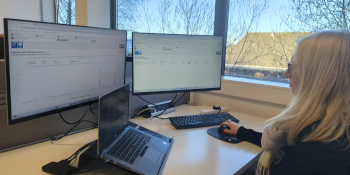
Risk management technology enables this insight. It captures personalised data from workers and then transforms it into digestible, actionable information that safety managers and duty holders can use to evaluate and apply interventions. Powered by modern analytics platforms, this technology enables teams to identify and address patterns, trends, hotspots, and issues of operator competency or worker behaviour. Without this initial level of insight, it’s incredibly difficult to select and apply interventions in a consistent and impactful way.
R-Link is risk management technology that makes it possible for teams to develop more informed, more effective intervention strategies.
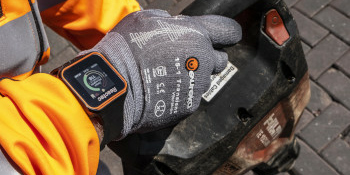
By collecting real-time, personalised data about workers’ risk from exposure to vibration, noise, dust, and workplace hazards, R-Link offers teams unprecedented insight into their workplace risk environment, and empowers them to make data-driven decisions that can move the health and safety needle forward.
To speak with a member of the team about R-Link, just send us an email.