Workers on (or near) the factory floor are exposed to a range of machinery, equipment, and processes that generate a potentially harmful amount of noise. Prolonged exposure to these sources of risk often result in irreversible harm to workers’ hearing. In order to effectively protect the hearing health of factory floor workers, employers must go beyond traditional risk assessments and PPE, and aim to truly understand their noise environment.
With reliable and accurate insight into your workers’ actual exposure to noise, teams can adopt a more precise, more effective approach to occupational noise monitoring and management that drives positive outcomes for workers, and organisations.
Factory floors are complex noise environments
Put simply: Factory floors are noisy. There is a range of machinery, equipment, and processes that can seriously threaten the hearing health of workers. From compressed air and conveyors to punch presses and power tools, manufacturing noise is being generated all the time, from multiple sources.
Heavy machinery:
Forklifts, pallet trucks, wrapping machines, and even duct-tape dispensers pose noise-related risks to workers on factory floors. Even machines that aren’t typically
considered “loud” or “noisy” can threaten the hearing health of workers after repeated or long-term exposure. And certain workers – such as forklift drivers – will be exposed to more noise than workers who do not operate machinery. Also, factory conditions – including temperature, size, occupancy levels, and acoustics – can directly impact how much noise is generated by certain activities.
Material handling:
Activities involving loading, unloading, moving, or handling materials can produce potentially harmful amounts of noise. Most often, this noise is dangerous because it’s near-constant on the factory floor and workers are exposed to it over extended periods of time. But materials handling can also result in impact noise, such as when heavy materials are offloaded onto hard surfaces, which can also threaten the hearing health of workers.
Manufacturing processes:
Common manufacturing processes – such as those which use high speed conveyors or stampers – can generate loud and repetitive noises that can contribute to hearing loss in factory floor workers. These large-scale processes are running almost constantly in many plants or warehouses, meaning they can impact workers who aren’t even directly engaged with these activities.
In sum: This type of noise environment – one that produces continuous and varying levels of sound – can be difficult to properly monitor and manage. This is particularly true if your team is still relying upon traditional risk assessments, without more, to inform your approach in this area.
Protecting factory floor workers requires a modern approach to noise monitoring and management
As we know, the amount and type of noise that factory floor workers are exposed to is changing all the time. But traditional risk assessments only provide a snapshot of your risk environment with regard to noise. They reflect a moment in time, and while they can help you build a foundation for better noise monitoring and management, they fall short of well and truly protecting the hearing health of your workers. Even when PPE is provided, it’s difficult to know if it’s adequate, if it’s been worn properly, and if it’s being used regularly and at the right times. This means that workers on the factory floor – even those with access to PPE – are still at risk of being exposed to harmful levels of manufacturing noise.
In this kind of dynamic working environment, it’s important that employers go beyond snapshots and strive to build workplaces which are safer and healthier for workers. This means adopting a modern noise monitoring solution that helps you to better understand your actual, every day noise environment, and how it’s impacting your factory floor workers.
The impact of occupational noise isn’t one-size-fits-all
A modern noise monitoring solution is one which monitors individual workers’ exposure to risk from occupational noise.
The amount of noise to which any one worker is exposed is unique: workers who do the same job for the same amount of time won’t necessarily experience the same health impact. This is one of the key reasons why a generalised approach to noise monitoring and management – such as a traditional risk assessment – is ineffective. Without accurate and reliable information about your workers’ personal exposure to risk from noise, it’s impossible to implement a noise management program that adequately protects all workers.
It’s also important to note that current regulations in this area are overripe for refinement. The Control of Noise at Work Regulations (2005) are now twenty years old. Given the rapid pace at which industries (such as manufacturing or transport, for example) evolve and change, the reality is that there are workplace situations - which are the result of modern workplace environments - that regulations which were last updated two decades ago simply cannot contemplate, or meaningfully address.
Smart Alert + Reactec: Take control of your noise environment
Taking control of your workplace risk environment with regard to noise means leveraging personalised, at-ear noise monitoring technology to enable more confident, more impactful decision-making. With access to insight that helps you identify areas of concern – including inefficient processes, malfunctioning machinery, or unsafe worker behaviour – you’ll have the tools you need to actually move the needle when it comes to protecting your factory floor workers’ hearing health.
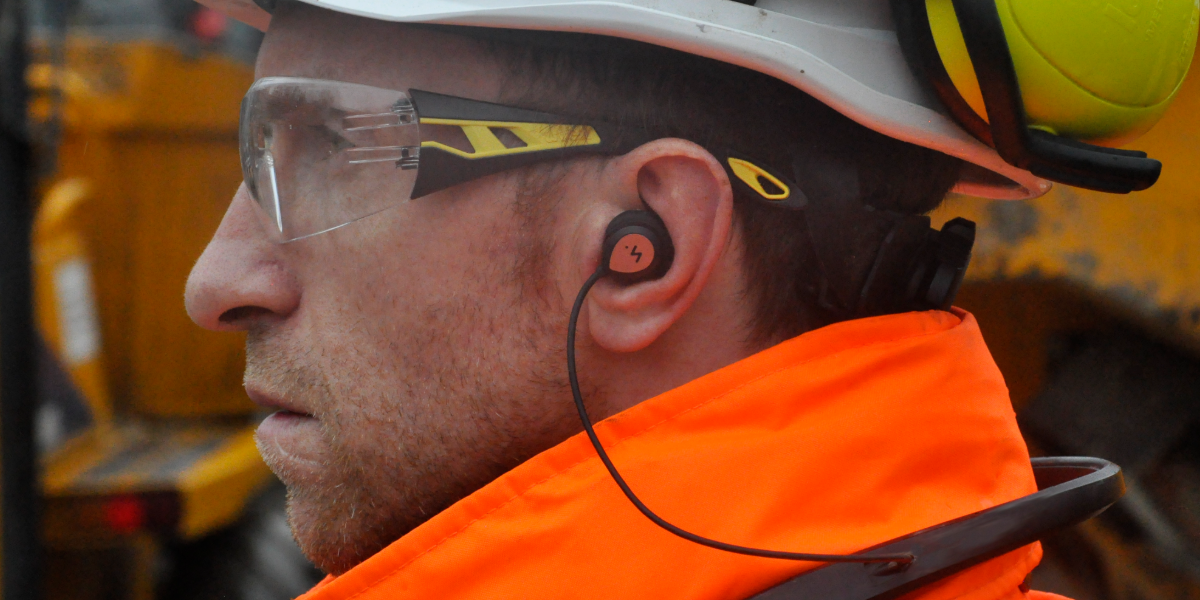
Smart Alert is revolutionary at-ear noise monitoring technology. It’s designed to remove guesswork from the risk management equation by putting people, not places, at the heart of hearing loss prevention. With real-time alerts and behaviour nudges, Smart Alert is designed to keep workers safe and protected in-the-moment – a necessity in fast-moving, dynamic environments, and something that simply cannot be achieved through periodic risk assessments.
Smart Alert is powered by Reactec’s powerful analytics platform, which automatically transforms data on individual workers’ exposure to occupational noise into digestible, actionable insights that employers can use to create safer working conditions.
Ultimately, Smart Alert empowers organisations to shift gears from compliance-focussed and responsive, to prevention-first and proactive when it comes to occupational noise monitoring. This shift is necessary for adequately protecting workers from Noise-Induced Hearing Loss, which is an irreversible – but completely preventable – condition.
Factory floor workers operate in uniquely fast-moving and dynamic environments. Protecting their hearing health requires an approach to noise monitoring and management that can keep up with the pace of their work, and drive change when necessary.
Book a demo
To learn more about how modern noise monitoring technology from Smart Alert + Reactec can help your team stay safer and healthier, you can send us an email, or visit this web page to learn more about NIHL prevention.