The Health and Safety Executive's recent inspection campaign has delivered a sobering message: when it comes to protecting workers from noise-induced hearing loss, we're falling dangerously short. In this blog, we explore why traditional noise management approaches are falling short and what needs to change to better protect workers from hearing damage.
The Shocking Statistics
The numbers from HSE inspections paint a worrying picture:
- Three-quarters of noisy workplaces lack essential knowledge on maintaining hearing protection equipment
- More than 75% of employees in high-noise environments don't know how to properly store their hearing protection, check it for damage, or report equipment faults
- 63% haven't received guidance on wearing protection continuously during noise exposure
- 80% lack training on correct wearing techniques
- 95% of employers have not verified whether workers wearing hearing protection can still hear critical warning signals like fire alarms or vehicle reversing alerts
Chris Steel, HSE's Principal Specialist Inspector, put it bluntly: the gaps found in implementation are serious, placing workers at added risk of excessive noise exposure when they may believe they're being protected.
The Cuff Reality Check
The HSE is promoting the CUFF checking system to address these failings which covers Condition, Use, Fit the ear, and Fit for purpose. It's a useful framework, but it also highlights just how much active management hearing protection actually needs.
Here's the uncomfortable truth: the CUFF system exposes the fundamental problem with traditional approaches. Personal protective equipment sits at the bottom of the hierarchy of control because it needs constant attention. Unlike engineering controls that work automatically, hearing protection requires ongoing information, instruction, training, and supervision to remain effective.
The HSE's inspections highlighted some real-world examples. During one site visit, an employee had selected earplugs based solely on their football team's colours. At another, a factory manager walked 100 metres to fetch his earplugs whilst leaving an HSE inspector at the entrance, then walked back before inserting them, defeating the purpose entirely.
Even when workers have the right equipment and the best intentions, execution fails. Earmuffs get worn over hats and hair accessories. Earplugs are inserted without proper technique or clean hands. Protection sits in storage whilst workers operate noisy equipment.
Why Traditional Methods Can't Keep Up
The problems the HSE has identified aren't just about training gaps or worker behaviour. They point to something deeper: the traditional tools and methods we use to manage noise risk simply aren't up to the job in modern workplaces.
Most employers still rely on a fragmented patchwork of manual surveys recorded in notepads and spreadsheets, short-term consultant reports with limited scope, and PPE-only approaches that provide no visibility into actual compliance. These methods fail to identify high-risk areas or workers, can't track exposure trends or the effectiveness of control measures, and leave employers unable to prove compliance during incidents or claims.
As a result, organisations spend money on hearing protection, conduct periodic surveys, and tick compliance boxes, all whilst remaining blind to whether their workers are actually protected.

Smart Alert - personal exposure monitoring
A Smarter Approach to Noise Risk Management
At Ideagen Reactec, we've spent years helping over 1,400 organisations manage hand-arm vibration risks with confidence. Now we're bringing that same expertise to noise risk management with a solution designed to address the gaps the HSE has identified.
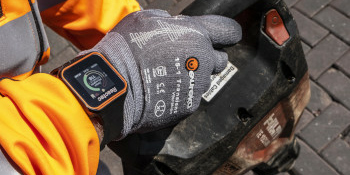
Our approach centres on the R-Link watch, which pairs seamlessly with noise dosimeters and in-ear monitors from four leading brands: Casella, Larson Davies, Pambry, and Noise Smart. For the first time, organisations can choose the monitoring solution that best fits their workforce whether traditional dosimeters or innovative in-ear monitors, all within a connected ecosystem.
Real-Time Worker Feedback
When action levels are exceeded, the R-Link watch prompts workers to wear hearing protection immediately. No more relying on workers to remember, no more hoping they'll make the right choice. The system provides coaching in the moment, driving behavioural change where it matters most.
Automated Exposure Tracking
By pairing a worker's noise device with their R-Link watch, you automatically capture their personal exposure data. This eliminates the manual steps that lead to incomplete records and compliance gaps. High-risk exposures get documented, high-risk workers can be tracked, and the effectiveness of control actions can be captured without additional administrative burden.
Live Visibility for Supervisors
Well-positioned Ideagen Reactec Gateways give supervisors live visibility into noise levels across the workplace. They can identify hotspots as they emerge, verify that controls are working, and intervene before exposures become hazardous.
Analytics That Drive Action
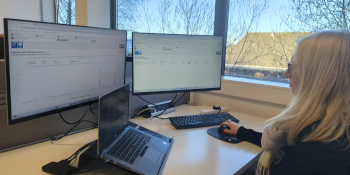
Our cloud platform continuously refreshes noise reports and trend analysis by worker, team, or location. It reveals patterns that help you understand where risks are highest, which interventions are working, and where you need to focus your efforts.
Start Simple, Scale Strategically
You don't need to transform your entire noise management programme overnight. Start by investing in some noise dosimeters and pairing them with R-Link watches to unlock automated exposure tracking. Use initial assessments to establish baseline noise levels and identify hotspots by rotating dosimeters across different areas.
Then focus your monitoring efforts where they'll have the greatest impact: workers in high-noise zones or those with low PPE adoption rates. Regular monitoring in these targeted areas drives behavioural change and improves compliance over time.
As your programme matures, the R-Link ecosystem grows with you, providing the data and insights you need to make continuous improvements.
The Bottom Line
The HSE's findings should serve as a wake-up call for every organisation managing noise risk. Traditional approaches including manual surveys, periodic assessments, and PPE alone aren't enough to protect workers or ensure compliance. They leave dangerous gaps that put workers at risk and expose organisations to liability.
Once hearing damage occurs, it cannot be reversed. The investment in proper noise management isn't just about compliance or avoiding fines. It's about preserving something irreplaceable: your workers' ability to hear.
The question isn't whether you can afford to upgrade your noise management approach. It's whether you can afford not to.
Ready to close the gaps in your noise management programme?
Contact our team to learn how Ideagen Reactec's R-Link solution can help you protect your workforce with confidence.